
Cargo Securing
Poor cargo securing can damage goods, vehicles, ships, and people and sometimes cause serious accidents and incidents. It is not always easy to know how cargo should be secured correctly, and it can be difficult to determine who is responsible for ensuring that cargo securing is carried out.
Table of contents
Here you can quickly find what you are looking for in cargo securing!
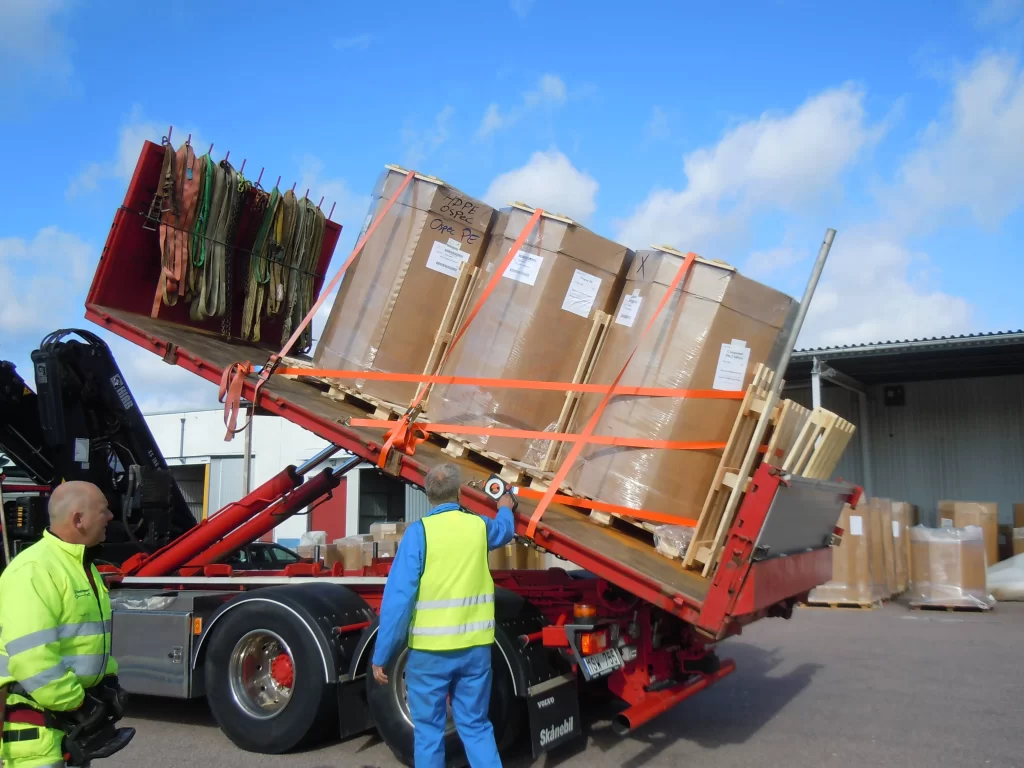
Training and consultation in Cargo Securing
Insufficient securing of cargo can damage goods, vehicles, ships and people, and sometimes cause serious accidents and incidents. It is not always easy to know how cargo should be secured correctly, and it can be difficult to determine who or who is responsible for ensuring that cargo securing is carried out.
The Goal of Cargo Securing
There are two main goals with cargo securing.
- The first is to avoid incidents or accidents caused by inadequate cargo securing. Goods must not fall off a truck during a sudden evasive manoeuvre, goods must not fall out of a railway wagon, and goods should not be displaced on board a ship. The worst thing that can happen in connection with poorly loaded and secured goods is that people are injured or killed. Therefore, the first main goal of cargo securing is to eliminate the risk of accidents.
- The second goal is obvious to those who handle the goods – that no damage to the goods should occur. No recipient of goods accepts damaged goods. Damage to goods leads to activities that can be costly; replacement deliveries, complaint handling, etc. This means that the second main goal of cargo care and cargo securing is to minimise damage to the goods.
The goal of cargo securing is to secure the cargo with the least possible work effort and material consumption to obtain a safe transport according to current regulations and thereby eliminate the risk of accidents and avoid transport damage to the goods caused by inadequate cargo securing.
Factors That Affect Cargo Securing
There are several factors that affect how goods should and need to be secured. These factors can be divided into four areas:
- The properties of the goods
- Type of load carrier
- Modes of transport involved
- Choice of securing methods and equipment
Click on one of the following links to read more about:
Cargo Securing Services
MariTerm AB has solid experience in the field of cargo securing and can offer training and consultation according to the following:
Cargo Securing Certificates and Cargo Securing Instructions
Cargo securing certificates and cargo securing instructions are prepared to give clear instructions on how goods are to be loaded and secured in containers, swap bodies, trailers, lorries or railway wagons. The certificates and instructions are drawn up to meet current regulations for the transport of goods by road, rail and sea.
For companies that regularly load out the same type of products, it has proven advantageous to draw up certificates or instructions for cargo securing. MariTerm AB has prepared cargo securing certificates and instructions, which meet both national and international regulations, for a large number of Swedish and foreign industries.
Cargo Securing in Containers
Loading and securing goods in containers may require a little more planning, preparation and knowledge of different cargo securing methods than when securing cargo in trailers, and MariTerm AB can therefore be helpful in consulting regarding container stuffing. MariTerm conducts training in container stuffing, produces cargo securing certificates and instructions, and conducts practical tests with goods loaded in containers.
Practical Tests and Tests for Cargo Securing
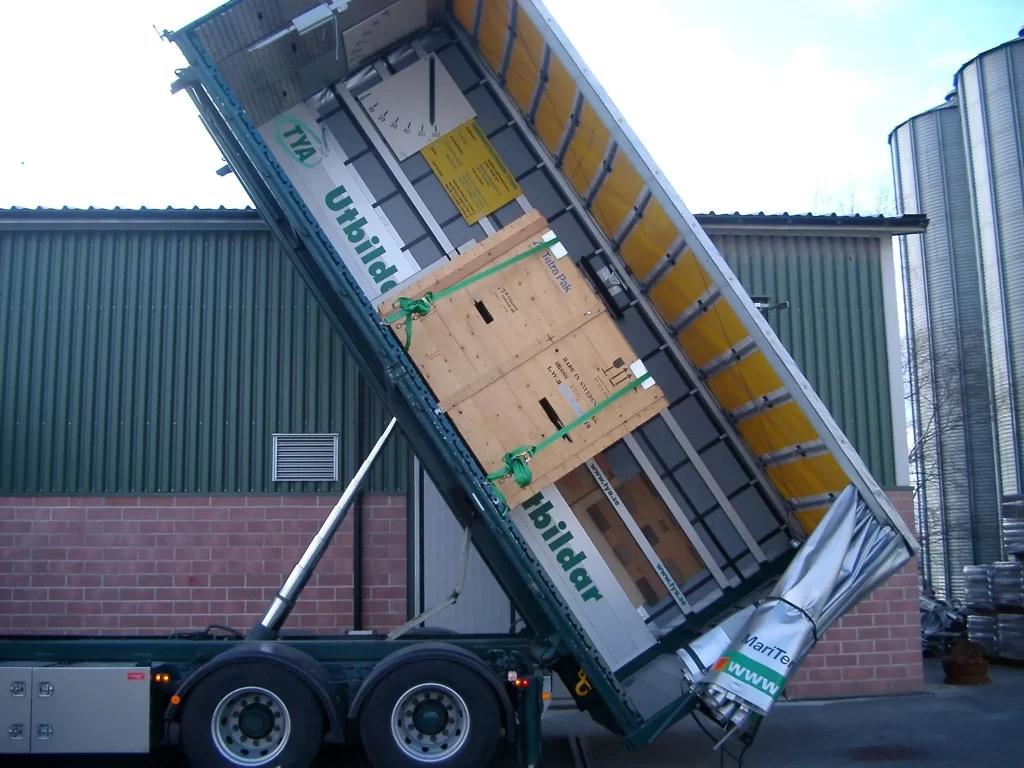
To simulate the forces that can arise during transport and to investigate how goods behave when exposed to different stresses, various practical tests can be carried out. Some simulations can be carried out with the help of simple tilt tests with limited access to test material, while other tests require more advanced equipment, measuring instruments and planning.
Training in Cargo Securing
MariTerm conducts cargo securing training in the form of open or company-internal courses that are intended for cargo owners, carriers, port and terminal personnel and others who work with freight transport in various ways. The courses provide the necessary knowledge of theoretical and practical methods to load and secure goods in different load carriers in the best possible way.
Research and Development in Cargo Securing
MariTerm has carried out several research and development projects in the field of cargo securing. The RASLA project developed proposals for equipment for rational securing of loads on vehicles and railway wagons. Some of the equipment that was developed within this project has been installed on the cargo securing vehicle that is used for the practical parts of our training courses.
Cargo Damage, Inspections and Cargo Damage Surveys
MariTerm has inspectors approved by the Swedish Maritime Administration for cargo securing. MariTerm AB has on several occasions been commissioned to investigate the cause of cargo damage and assist various parties in disputes when goods have been damaged during transport. MariTerm has also carried out surveys on behalf of insurance companies and the Swedish Accident Investigation Authority in connection with major accidents that have occurred during transport or cargo handling.
Quick Lashing Guides for Cargo Securing
A Quick Lashing Guide for cargo securing is an aid in dimensioning cargo securing arrangements to obtain the necessary securing of cargo in a load carrier in accordance with current regulations. There is a Quick Lashing Guide in accordance with the European standard EN 12195-1, which applies to road transport in Europe, and a Quick Lashing Guide that meets the requirements according to the IMO/ILO/UNECE Code of Practice for Packing of Cargo Transport Units (CTU Code), which applies to international transport by road, rail and sea in sea transport area A, B and C, respectively.
MariTerm also offers a company-adapted Quick Lashing Guides for cargo securing, which is an aid in dimensioning cargo securing for company-adapted goods and lashing material.
Frequently Asked Questions About Cargo Securing
What is Cargo Securing?
Cargo securing uses different methods and equipment to prevent cargo from sliding, tipping, or shifting on or within a load carrier during transport, avoiding damage to goods, load carriers, people, and the environment.
What are the Most Common Methods?
Cargo securing can be done by blocking, locking or lashing, or a combination of these methods. The most common lashing methods are top-over lashing, half-loop lashing, spring lashing and straight lashing. A combination of blocking and top-over lashing is common.
What Laws do I Need to Relate to?
Different laws, regulations, standards, and codes apply to different modes of transport. For road transport in Sweden, regulation TSFS 2017:25 applies and in Europe, among other things, the standard EN 12195-1:2010. For maritime transport, reference is made to the CTU Code and for rail transport in Europe, to the UIC Loading Guidelines.
More information about rules and guidelines for cargo securing for different modes of transport can be found here.
What Equipment Should I Have for Heavy Loads?
To secure heavy loads, use stronger cargo-securing equipment, such as chains or coarser lashing straps. Lower-strength equipment can be used, but it requires more pieces to achieve the same effect. Remember that the load carrier’s lashing attachments must be at least as strong as the lashing equipment.
Read more about cargo securing equipment here.
How Should Cargo Securing Equipment be Marked?
Under EU Directive 2014/47/EU, cargo-securing equipment used for road transport in Europe must be marked with its strength in accordance with European standards EN 12195-2 for lashing straps, EN 12195-3 for chains, and EN 12195-4 for wire. Other standards apply in other parts of the world.
Read more about marking of cargo securing equipment here.
When is a Cargo Securing Certificate Needed?
According to Swedish road regulation TSFS 2017:25, a cargo securing certificate must be produced for goods and cargo securing arrangements not covered by the referenced standards, e.g., when lashing non-dimensionally stable goods or using blocks, half-loop slings, or “silly loops”. The arrangement must be verified by practical tests or by technical calculations.
Who is Responsible for Ensuring that the Cargo is Properly Secured?
For road transport in Sweden, the driver is responsible for ensuring that the load on his vehicle is properly secured. In several European countries, this responsibility is shared between the sender, carrier and/or driver. Damage to goods during transport is governed by civil law rules, while damage to third parties (person, property, or the environment) is governed by public law rules.
Contact
Send a message
Contact details
Phone
Visiting address
MariTerm AB
Sporthallsvägen 2A
263 35 Höganäs
Sweden