
Cargo Securing in Containers and on Flat Rack Containers
Table of contents
Here you can quickly find what you are looking for!
Cargo Securing in Containers and on Flat Rack Containers
Goods that are to be transported outside of Europe’s borders are usually shipped in containers, or on flat rack containers. The container is an ISO-certified cargo carrier with standardised dimensions and properties originating in the USA, which makes it different from a European standard trailer. The lashing points in a container are not as strong as in a trailer, and with a smaller internal width, EUR pallets do not fit into a container in the same way as in a trailer.
It is therefore more difficult to achieve a tight load in a container and there is often more free space left that must be filled.
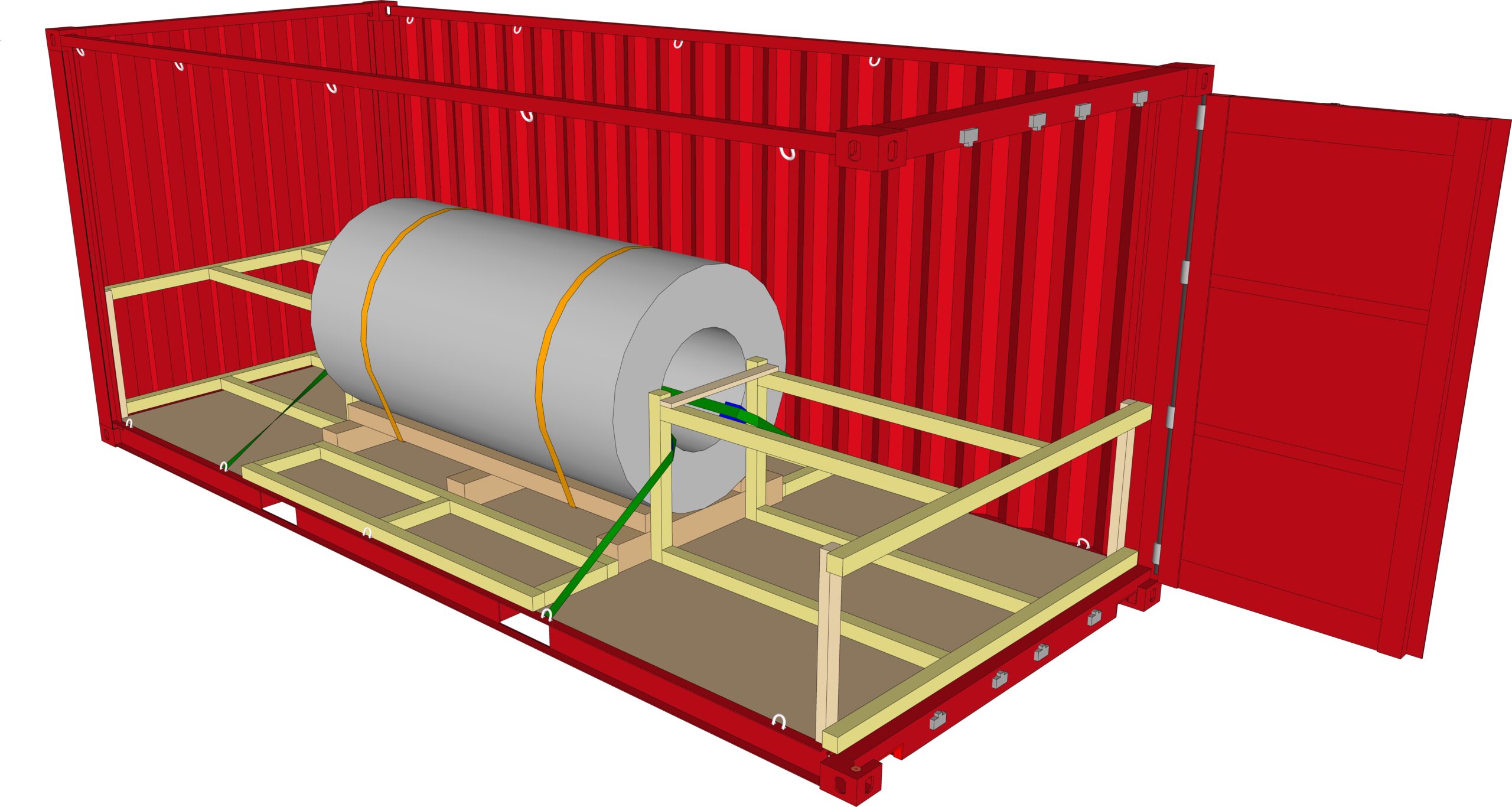
Methods and Requirements for Safe Transport
Cargo securing in containers should be dimensioned for 0.8 × the cargo weight when transported in sea area C (unrestricted), which places higher demands on the cargo securing to prevent slipping and tipping.
Otherwise, from a cargo securing point of view, the container is a grateful cargo carrier with strong structural details such as walls, gables and doors that are dimensioned to secure the cargo.
The cargo securing methods used for cargo securing in containers therefore differ somewhat from the methods used in a trailer or on a flat rack container. The main rule for cargo securing in containers is to block the goods, i.e. to place the goods against the container’s inner gable, its walls and against the doors and then fill any free space with empty pallets, dunnage bags, wood or other filling material. Lashing is used as a cargo securing method only when it is not possible to block the goods.
Cargo Securing in Containers – Quick Lashing Guides
To support cargo securing in containers of goods, the three UN bodies IMO (International Maritime Organization), ILO (International Labour Organization) and UN ECE (Economic Commission for Europe) have developed the IMO/ILO/UNECE Code of Practice for Packing of Cargo Transport Units (CTU Code). In the informative material belonging to the code, there is, among other things, a quick lashing guide for cargo securing in containers. Click here to see our quick lashing guides.
Cargo Securing in Containers – Services
Loading and securing in containers may require a little more planning, preparation and prior knowledge of different cargo securing methods than cargo securing in trailers and MariTerm AB can therefore be helpful in consulting regarding cargo securing in containers and can offer the following services:
- Prepare and conduct training in cargo securing in containers
- Produce cargo securing certificates and instructions for cargo securing in containers
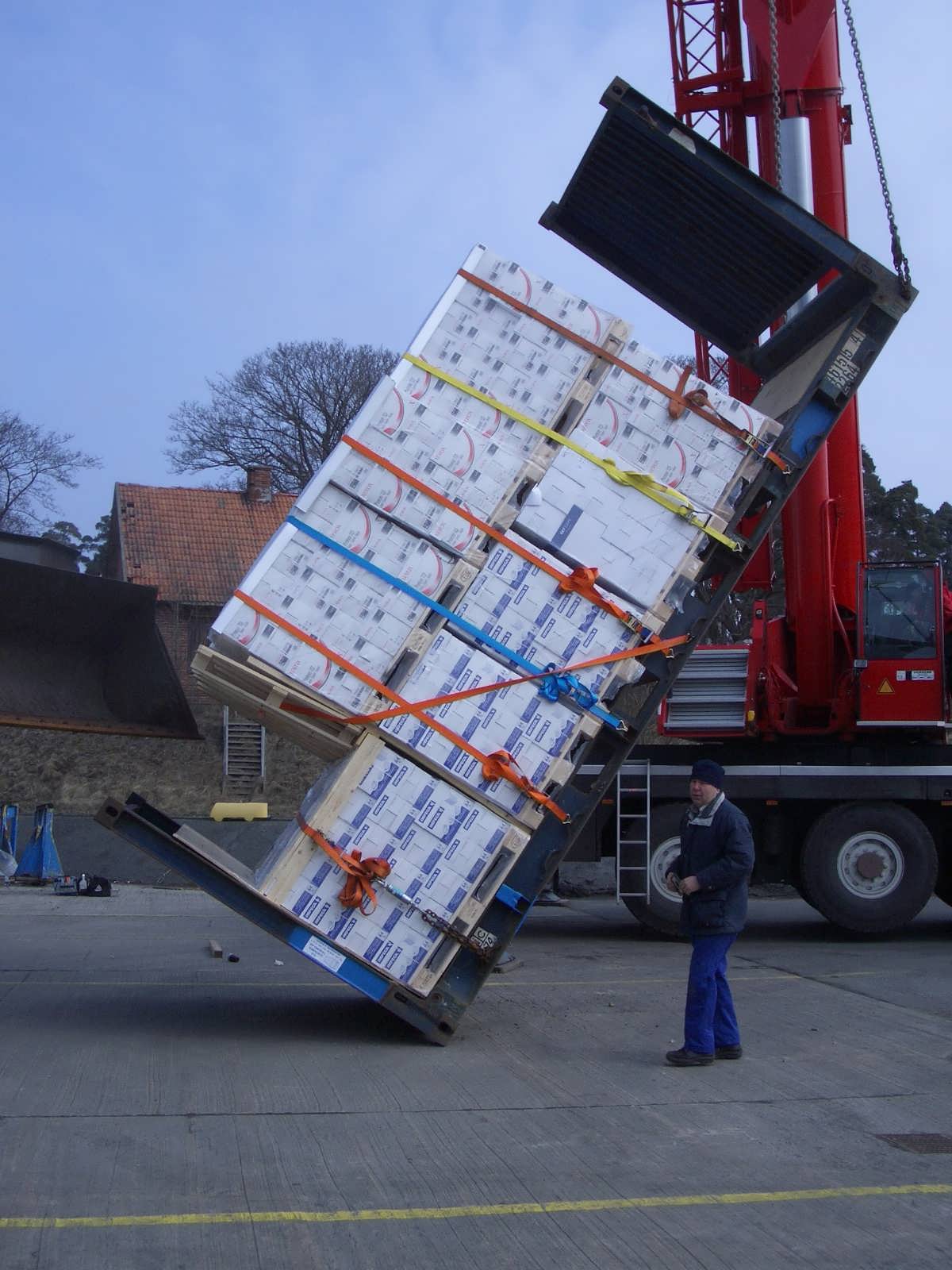
- Carry out practical tests for cargo securing in containers
- Develop a manual/handbook with principles, methods and other important aspects of container transport
- Assist in developing routines for inspection of containers before loading
Contact
Send a message
Contact details
Contact person
Phone
Address
MariTerm AB
Sporthallsvägen 2A
263 35 Höganäs
Sweden