
Training in Dangerous Goods
Some goods transported are inherently dangerous due to their properties, and thus are classified as dangerous goods. Here you will find valuable information about our dangerous goods training.
Table of Contents
Here you can quickly find what you’re looking for regarding dangerous goods!
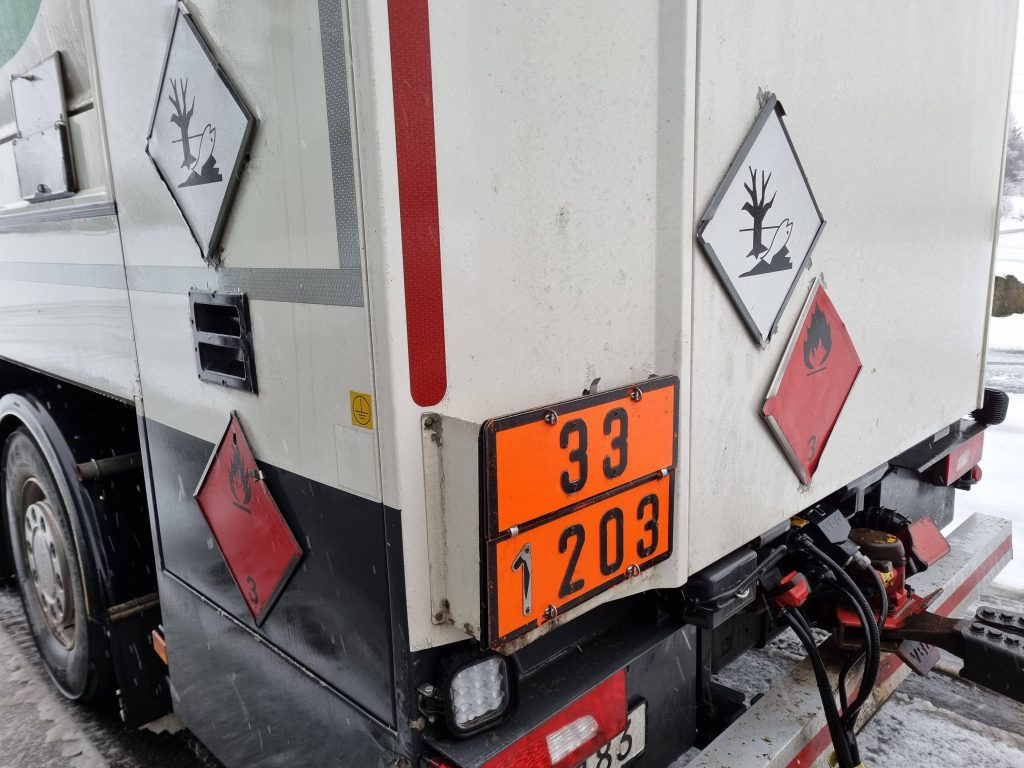
Transport of Dangerous Goods – ADR, RID, IMDG, and IATA-DGR
Regulations for dangerous goods in all modes of transport (road, rail, sea, and air) require that everyone involved in handling dangerous goods during transport must undergo transport of DG training. This training must be adapted to the relevant mode(s) of transport, the specific substances being loaded, transported, or unloaded, and the tasks of the personnel involved. Training must be completed before beginning work with DG. MariTerm AB offers training in transport of dangerous goods for all four modes of transport.
Company-Specific dangerous goods training (1.3 training)
The requirement for training for personnel involved in the preparation and performance of the transport of dangerous goods is contained in the regulations for all modes of transport. The aim is to increase knowledge about the rules for the transport of dangerous goods and to reduce the risks associated with such transports. Affected personnel must undergo a so-called 1.3 training, named after section 1.3 of ADR, RID and IMDG and 1.5 of IATA-DGR.
Who needs training in the transport of dangerous goods?
It is important that all those involved in the preparation for and execution of the transport of dangerous goods are continuously trained on the relevant dangerous goods, their characteristics, handling and transport regulations, as well as on the measures to be taken in the event of an incident or accident. Among other things, according to the regulations, those who:
- Classifying dangerous goods
- Packing, marking and labelling dangerous goods
- Loading and unloading dangerous goods
- Writing transport documents with dangerous goods
- Booking dangerous goods for transport
- Handling dangerous goods
- Loading or unloading dangerous goods to and from ships
- Transporting dangerous goods
- Others who encounter the transport of dangerous goods in their work
Undergo training in the transport of dangerous goods
The employer is responsible for ensuring that the staff receive and have the necessary training, and completed training must be record and saved for at least five years. Staff who have not been trained may only perform tasks under the supervision of trained staff.
Training must take place regularly and the IATA-DGR stipulates that refresher training for air transport must take place within 24 months of the last completed training. In ADR, RID and IMDG, it is not stated how often refresher training should take place, but one interpretation of the rules is to carry out refresher training within two to five years from the last training occasion, either to take into account changes in the regulations that are issued every two years or to keep the requirement for documentation of training for five years.
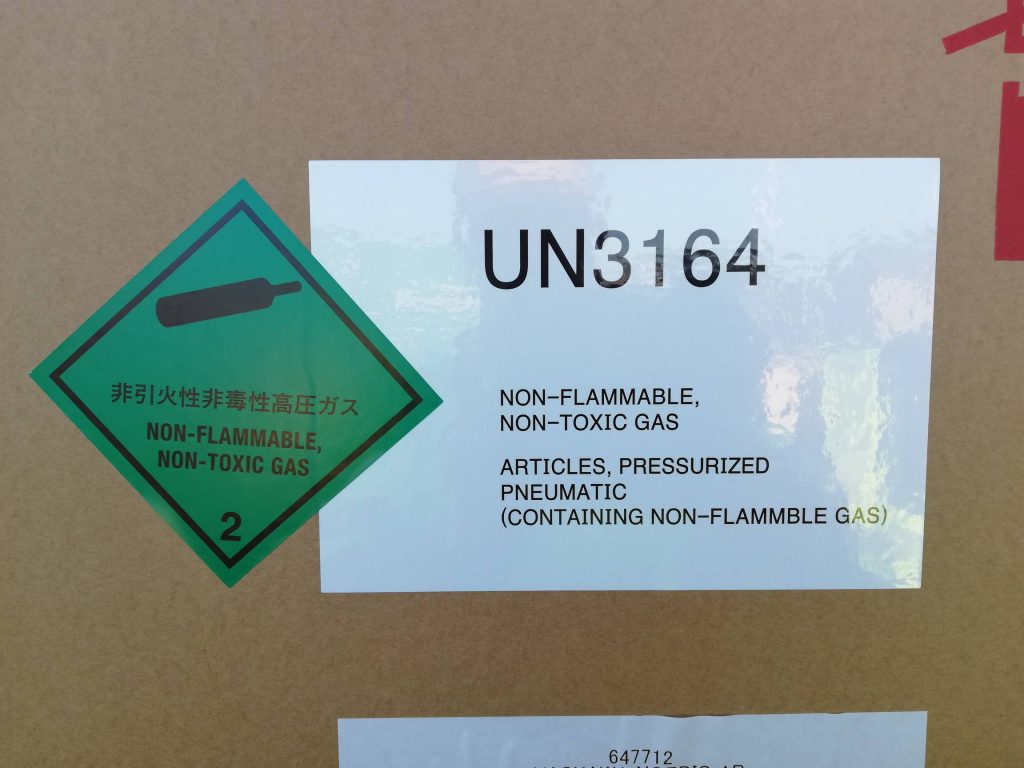
Content of the dangerous goods training (1.3 training)
The 1.3 training shall consist of the following three parts:
- General training: The training covers the general conditions of the regulations on the transport of dangerous goods.
- Function-specific training: Includes the provisions corresponding to the tasks and responsibilities of the staff. In cases where the transport involves several modes of transport, the staff must also be trained in the regulations that apply to these modes of transport.
- Safety training: Covers the hazards and risks that the dangerous goods in question can entail in their own operations during transport and loading and unloading. The goal is to make the staff aware of safe handling and emergency measures. Furthermore, a section on transport security is included to minimise the risk of theft and unauthorised handling of the dangerous goods.
There is no requirement for how long the training should be, but it can be anything from a few hours to several days.
Dangerous goods training from MariTerm AB
Mariterm AB offers training in the transport of dangerous goods for all personnel involved in the handling of transports in dangerous goods. The training is adapted to the current mode of transport, the dangerous goods categories/substances that are transported and handled, and to the personnel categories that are to be trained. The length of a 1.3 training is usually four-eight hours for a basic course and two-four hours for a refresher training course. If air transport is to be included in the training, a couple of hours of training will be added. After the training, certification of completed training is issued, which the employer must record for at least five years.
Since the requirement for safety advisors was introduced in 2000, MariTerm AB has carried out 1.3 training in dangerous goods for chemical and manufacturing industries, hauliers, freight forwarders and distributors as well as for ports, shipping companies and railway operators. We have also conducted training in the transport of dangerous goods at sea in accordance with the IMDG Code for Maritime Officers at universities and shipping companies. We have also, on about 15 occasions, carried out training in the transport of dangerous goods in accordance with the IMDG Code on behalf of the IMO, the International Maritime Organization, when we trained government officials in Thailand, Chile, Romania, Ghana, Georgia, Suriname, Kenya, South and North Korea as well as in Fiji, Cape Verde and the Philippines.
Contact
Send a message
Contact details
Contact person
Petra Hugoson
Phone
Address
MariTerm AB
Sporthallsvägen 2A
263 35 Höganäs
Sweden