
Classification of Dangerous Goods
Table of contents
Here you can quickly find what you are looking for!
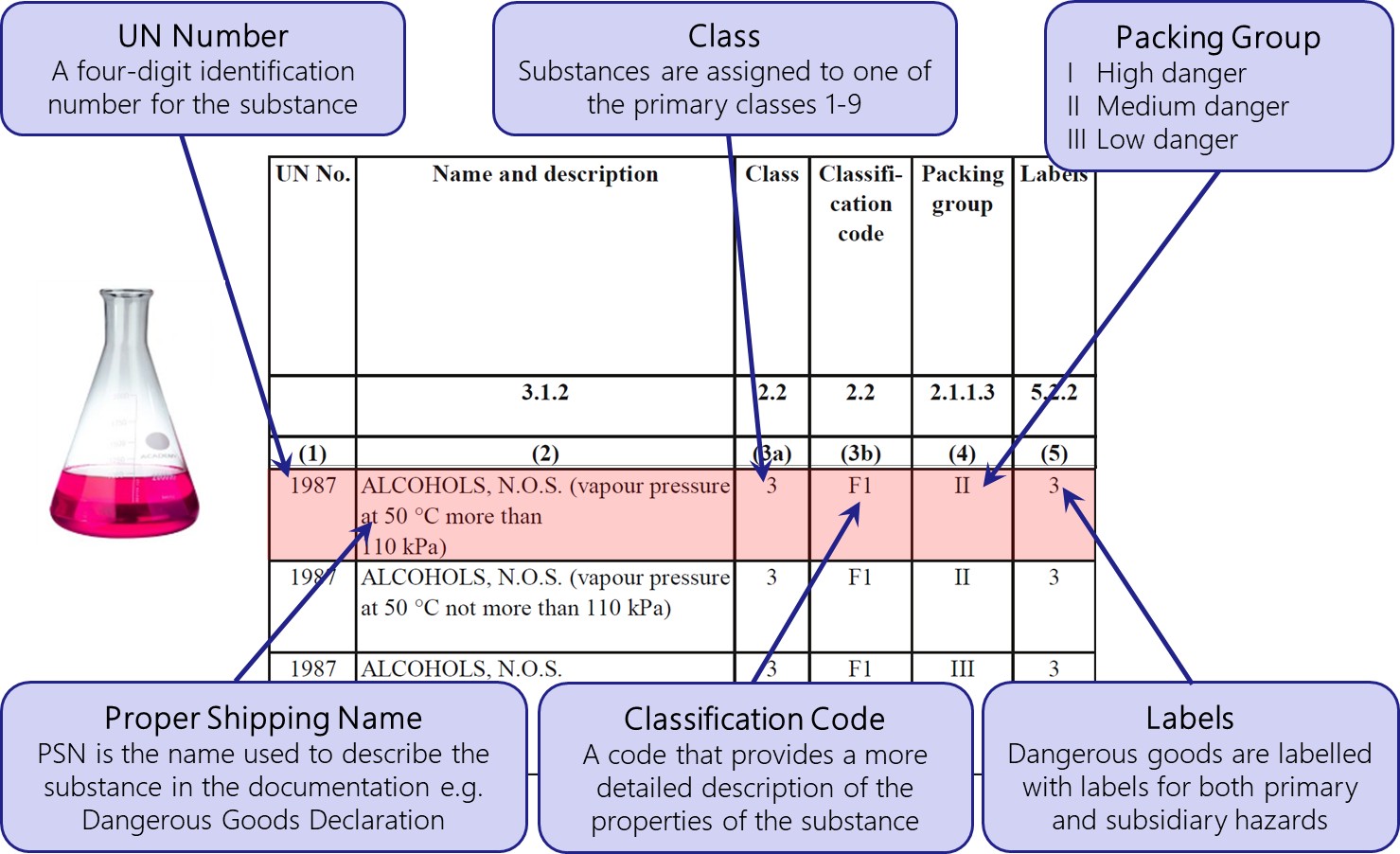
The classification, which shall be carried out by the shipper/consignor or by the applicable competent authority where specified in the regulations, is made using:
- Dangerous Goods Transport Regulations – ADR, RID, IMDG or IATA/DGR
- GHS – Globally Harmonized System of Chemical Classification and Labelling
- UN recommendations on the transport of dangerous goods, Manual of tests and criteria
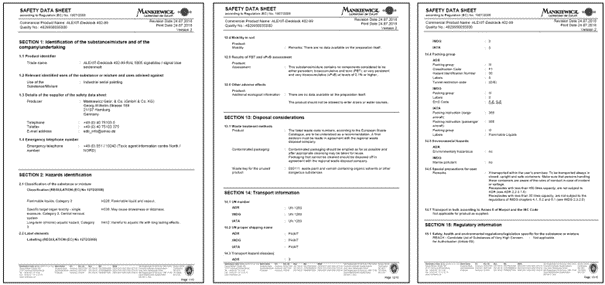
According to GHS the supplier or the importer of substance to a market supplier of chemical must provide Material Safety Data Sheet (MSDS) written in the official language of the market it shall be sold. The information relevant to the transport itself can be found under point 14 of the MSDS.
Some of the classes are divided into packaging groups depending on how dangerous the substance or object is; high, medium or low danger. The packaging group decides, among other things, the choice of packaging.
Part of the classification of dangerous goods is to determine their environmental hazard. Environmentally hazardous substances mainly include water pollutants and there is a risk that they can be acutely or chronically toxic in water or aquatic environments if they accumulate or are difficult to degrade. Environmentally hazardous substances are classified according to the UN’s regulations GHS (Globally Harmonized System of Chemical Classification and Labelling) and are not a class of their own. This means that if a substance is only environmentally hazardous, it is assigned to class 9 – Miscellaneous dangerous substances or articles.

Contact
Send a message
Contact details
Contact person
Phone
Address
MariTerm AB
Sporthallsvägen 2A
263 35 Höganäs
Sweden