
Ship Stability
Table of contents
Here you can quickly find what you are looking for!
What is Ship Stability?
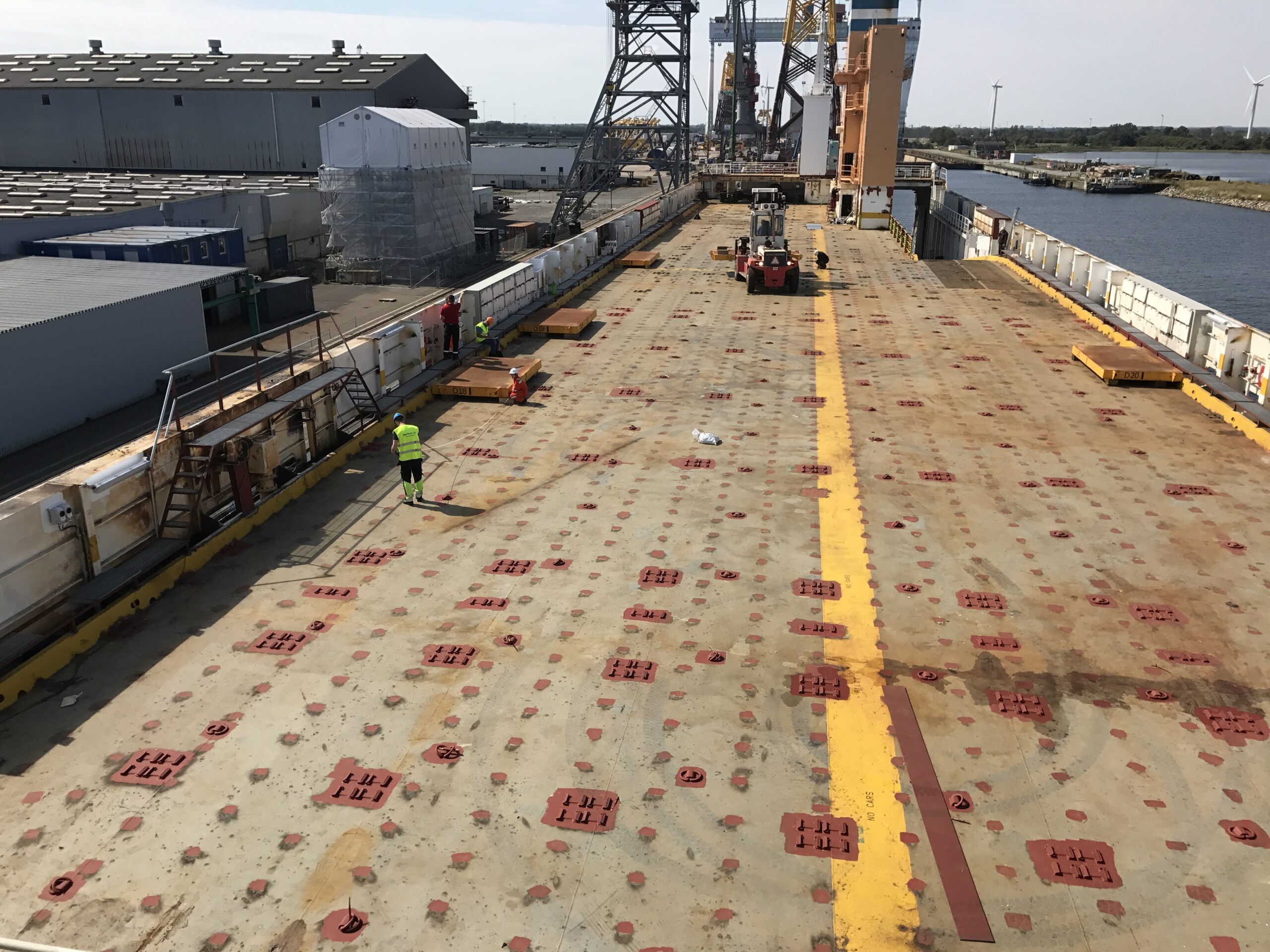
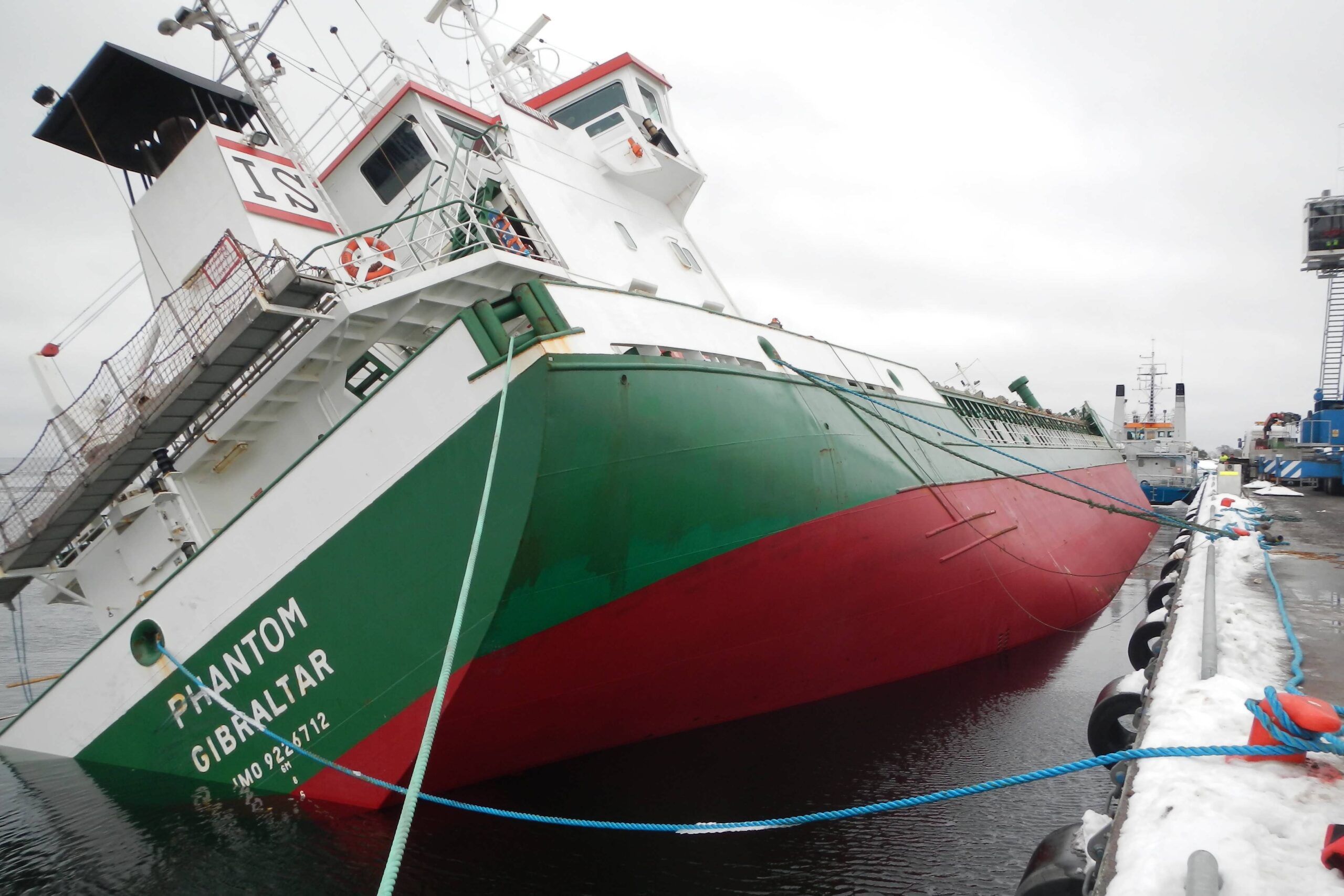
Ship stability refers to a ship’s ability to maintain its balance and remain upright under various conditions of loading, movement, and external forces. It is crucial for the safety and efficiency of all vessels, as unstable ships risk poor manoeuvrability, excessive rolling, or even capsizing. In the worst case, this can lead to the loss of passengers and crew, as well as the loss of the ship and cargo, and the release of environmentally hazardous substances.
Why Stability Matters
Excessively good stability, on the other hand, leads to the ship becoming stiff, and the cargo being subjected to unnecessarily high accelerations.
If the ship has an unfavourable trim, the efficiency of the ship’s propulsion is negatively affected.
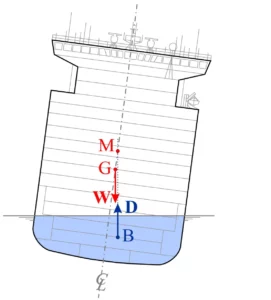
Ship stability is determined by various factors such as the ship’s shape, size, displacement, centre of gravity, centre of buoyancy, and weight distribution on board. Ship stability can be influenced by external forces such as waves, winds, and currents, as well as by movements of cargo or ballast.
Ship stability is a complex and dynamic field that requires a thorough understanding of the physical principles that govern a ship’s behaviour in water.
Ship stability is crucial in all phases of ship operation, from design and construction to loading, navigation, and maintenance. Correct stability calculations and monitoring during loading and unloading operations and sea voyages are necessary to ensure that the vessel remains seaworthy under various conditions.
Rules and Regulations for ship stability
To ensure good ship stability and seaworthiness, designers, shipyards, and operators must follow several guidelines and regulations, including international codes and conventions established by the International Maritime Organization (IMO) and national rules established by individual countries.
Basic international requirements for ship stability, both intact and damaged, as well as minimum freeboard requirements, are laid down in the IMO Convention Safety of Life at Sea, SOLAS, Chapter II-1. More detailed requirements are presented in the Intact Stability Code and the Load Line Convention.
In Sweden, the IMO regulations have been put into effect through the regulations TSFS 2009:114 – Transportstyrelsen’s regulations and general advice on the construction, stability, and freeboard of ships built before 1 January 2009 and TSFS 2021:95 – Transportstyrelsen’s regulations and general advice on the construction, stability, and freeboard of ships built on or after 1 January 2009.
Documentation and Services
MariTerm AB has extensive experience in calculations and investigations regarding ship trim, stress and stability.
All passenger ships and other ships over 20 gross tonnage must have their stability characteristics documented so that the officers on board can ensure that the ship is loaded and operated in a seaworthy manner. The same applies to pleasure craft with a gross tonnage of over 100. A trim and stability booklet must, among other things, contain hydrostatics, several load cases that are typical for the ship, including ballast condition, departure and arrival condition, icing, etc., ship data, tank data, and cargo hold capacity.
In connection with the new construction or conversion of ships, MariTerm AB can assist in planning, managing, and documenting weighing and inclining tests in accordance with the Transportstyrelsen’s regulations. In connection with this, we can also produce the necessary righting documentation for existing trim and stability booklets.
MariTerm AB offers services such as:
- Reviewing and revising trim and stability booklets
- Performing stability calculations for specific load cases with recommended cargo and ballast intake
- Delivering class-approved load planning systems that perform trim, stress, and stability calculations, together with our partners
- Performing weighing and inclining of ships
Contact
Send a message
Contact details
Contact person
Phone
Address
MariTerm AB
Sporthallsvägen 2A
263 35 Höganäs
Sweden