
Dangerous goods
Some goods that are transported are classified as dangerous goods due to their inherent properties. There are regulations for how dangerous goods are to be packaged, marked, labelled, handled, documented and transported, among other things, to avoid accidents or incidents occurring as far as possible.
Table of Contents
Here you can quickly find what you’re looking for regarding dangerous goods!
What are Dangerous Goods?
Dangerous goods are a collective term for substances and items that have hazardous properties and can cause damage to:
- people
- the environment
- property
- the safe operation of the means of transport
These risks arise if dangerous goods are not handled correctly during transport. Transport of dangerous goods by road, rail, sea, or air is defined as the “movement of dangerous goods by means of transport, including loading, unloading, storage, and other handling involved in the transport chain.”
An increasing number of people are affected by the transport of dangerous goods. Despite efforts in recent years to reduce the use of hazardous chemical substances and products, and to replace them with safer alternatives, the volumes of dangerous goods remain very large.
Classification of Dangerous Goods
Every chemical product or substance has a safety data sheet (SDS or MSDS) that describes the product’s or substance’s properties, potential risks during handling and transport, and measures for first aid and firefighting. Section 14 of the safety data sheet specifies whether the product or substance is classified as dangerous goods. The sender is responsible for identifying and classifying dangerous goods. A classification includes several key details, such as: UN number, proper shipping name, class, packing group, and environmental hazard.
9 Classes of Dangerous Goods
Dangerous goods refer to materials or items that may pose a risk to health, safety, property, or the environment during transport. These materials are categorized into nine classes according to international regulations, which define the type of hazard they represent. Here is an explanation of the nine classes:

Explosives
Substances and articles that can cause explosions or create a pyrotechnic effect.

Flammable liquids
Liquids that easily ignite and burn.

Oxidizing Substances and Organic Peroxides
Substances which, although not necessarily flammable in themselves, can cause or contribute to the combustion of other materials and objects containing such substances, usually by releasing oxygen. Likewise, substances which can initiate a decomposition process by generating heat.

Radioactive materials
All materials containing radionuclides where both the activity concentration and the total activity exceed certain predefined values. A radionuclide is an atom with an unstable nucleus that is thus subject to radioactive decay.

Miscellaneous Dangerous Goods
Substances and articles that pose a hazard during transport but don’t fit into the other classes, such as environmentally hazardous substances.

Gases
Compressed, liquefied, or dissolved gases that are flammable, non-flammable, or toxic.

Flammable solids
Solids that can catch fire easily, spontaneously combust, or react dangerously with water.

Toxic and Infectious Substances
Substances that, in relatively small quantities, and with short exposure, through inhalation, skin absorption or ingestion, can be harmful to health or lead to death in humans, as well as infectious substances that contain or are expected to contain pathogens.

Corrosive Substances
Substances, both solid and liquid, which through a chemical action cause irreversible damage to the skin, material damage in the event of leakage or even destruction of other goods or the means of transport.
Proper Shipping Name
The proper shipping name (PSN) is the name used to describe the dangerous goods in documents such as the dangerous goods declaration. The PSN is usually the chemical or technical designation of the substance and can be found in dangerous goods lists in various regulations, such as ADR, RID, IMDG, and IATA-DGR.
Some dangerous substances and articles are not individually named but are instead grouped under collective names or so-called N.O.S. designations (NOS = Not Otherwise Specified). These groups of substances and articles are also assigned a UN number, and an N.O.S. designation should, in most cases, be followed by the chemical or technical name of one or more components in parentheses. Trade names are not permitted.
UN Number
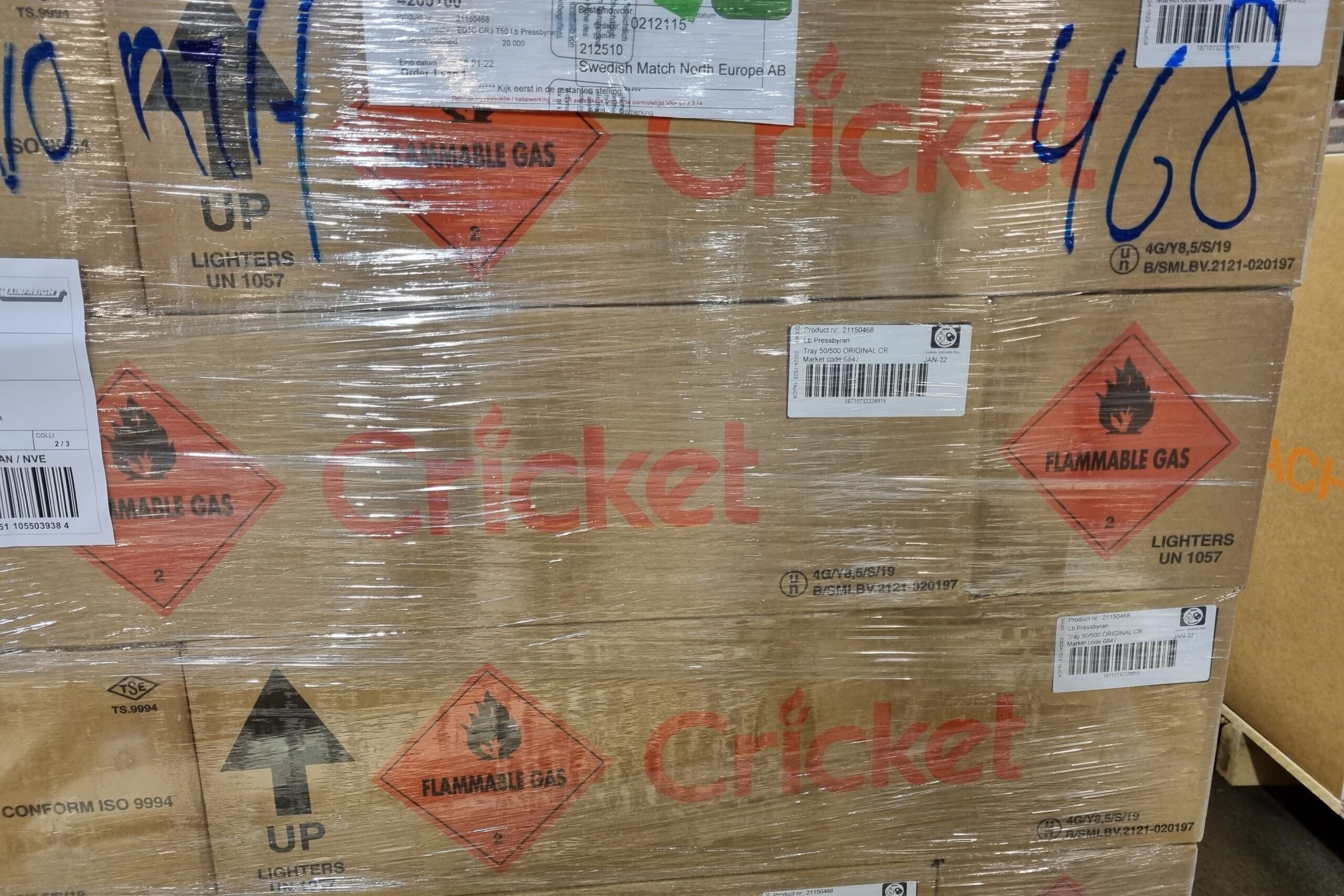
All substances or articles classified as dangerous goods are assigned a UN number, which consists of the letters UN followed by a four-digit number. The UN number is essential for locating a substance or article in the regulations, where there is a list of dangerous goods sorted in UN number order. The UN number is similar in all modes of transport: road, rail, sea, and air, and it is determined by the United Nations.
If a dangerous substance or article has more than one hazardous property, the primary hazard during transport, or the dominant risk, determines which class the substance or article belongs to. For example, methanol, which is a flammable and toxic liquid, is classified under Class 3 because the flammability is considered the dominant risk, while the toxicity is considered a subsidiary hazard during transport.
Packing Group
Several dangerous goods classes (3, 4.1, 4.2, 4.3, 5.1, 6.1, 8, and 9) are divided into packing groups depending on the level of danger posed by the substance or item:
- Packing Group I – High danger
- Packing Group II – Medium danger
- Packing Group III – Low danger
The packing group determines the choice of packaging as well as other transport conditions.
Exemptions regarding the nature of the transport operation
The agreement concerning the international carriage of dangerous goods by road (ADR) outlines what must be done before, during, and after the transportation of dangerous goods.
These rules specify which types of packaging must be used, how to label and mark the packages, how to placard the cargo transport units, documentation requirements, safety equipment that must accompany the transport, and the necessary training for the parties involved, among other things.
However, the regulations also include exemptions from these rules regarding depending on the transport operation.
Exemptions for Private Individuals, Businesses & Authorities
Exemptions for Private Individuals
Transport of dangerous goods by private individuals is exempt from ADR/ADR-S regulations if the goods are packaged for retail sale and are intended for personal or domestic use or for their leisure or sporting activities. Flammable liquids carried in refillable receptacles shall not exceed 60 litres per receptacle and 240 litres per transport unit. This exemption applies as long as measures are taken to prevent the contents from leaking under normal transport conditions.
Exemptions for enterprise companies
The carriage undertaken by enterprise companies which is ancillary to their main activities, such as deliveries to or returns from building or civil engineering sites, or in relation to surveying , repairs, or maintenance work, is exempt from ADR regulations if the quantities do not exceed 450 litres per package, including IBC containers and large packages, and within the maximum quantities in ADR subsection 1.1.3.6. Measures must be taken to prevent the contents from leaking under normal transport conditions.
These exemptions do not apply to Class 7 (radioactive materials).
Exemptions for Authorities during Emergency Response
Transport carried out by authorized authorities for rescue operations, or under their supervision, is exempt from ADR/ADR-S regulations if it is necessary for rescue efforts. This includes transport conducted specifically for rescue purposes.
Limited Quantity
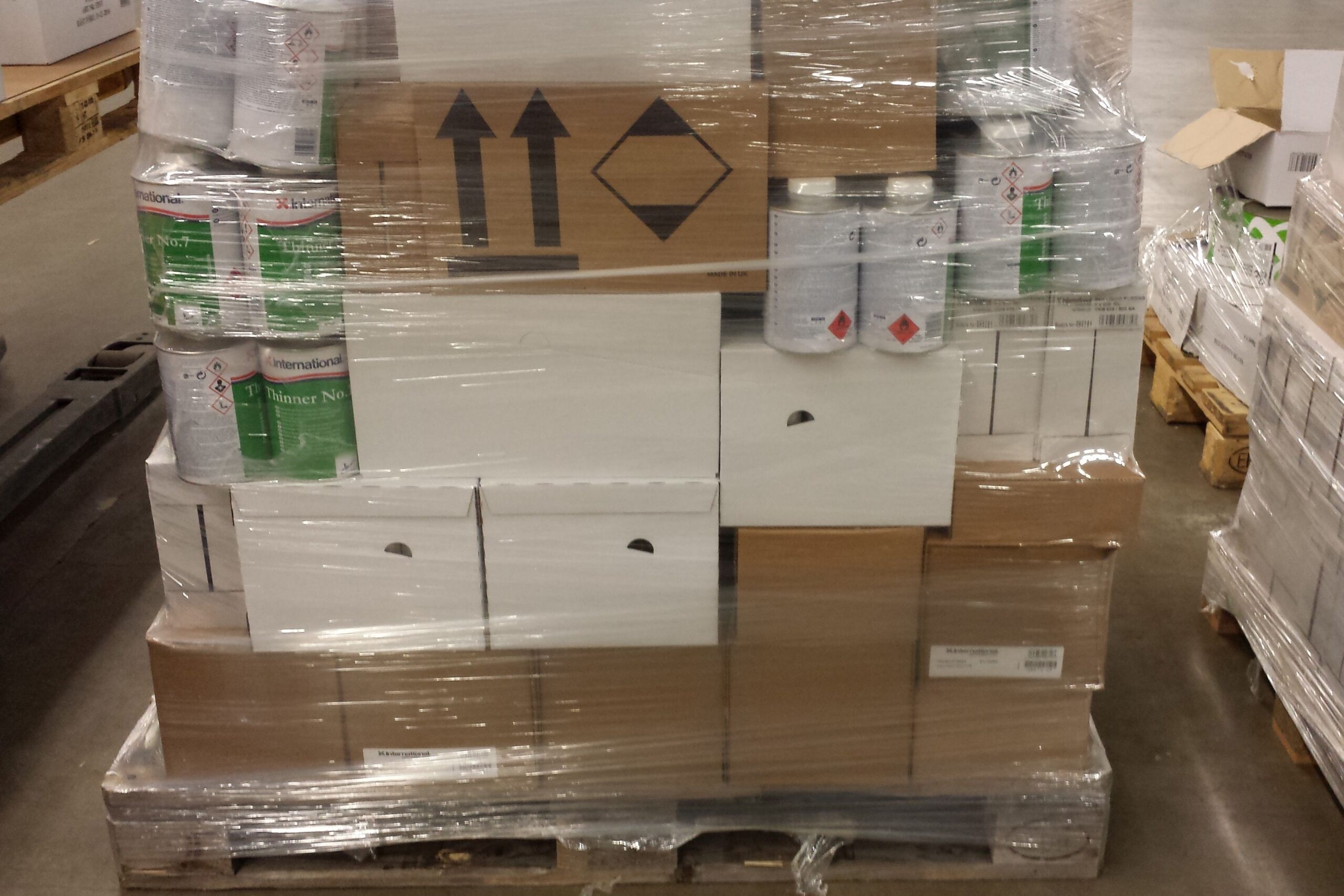
Limited quantity is a method to pack the dangerous goods without having to comply with all ADR regulations. The quantity of dangerous goods is limited per inner and outer packaging. It is the shipper/consignor who decides whether dangerous goods should be packaged/transported as limited quantity.

Small Load Exemptions
Small load exemptions relate to the total quantity of dangerous goods carried in packages by the “transport unit” (usually the van or lorry, but also any trailer) without following all ADR regulations. In this case, the amount of dangerous goods is limited per transport unit (with a maximum of 1000 “points”). It is usually the transporter/driver who decides whether dangerous goods should be transported according to the small load exemption.

Excepted quantity
Transporting dangerous goods in excepted quantities is an exception that is common for all modes of transport. The exception only applies to very small quantities indicated by the codes E0-E5 in the Dangerous Goods List. Dangerous goods transported in excepted quantities have special provisions regarding packaging, marking, labelling and documentation.
What are the rules for the transport of dangerous goods?
Each mode of transport has its own set of regulations:
- ADR for road transport
- RID for rail transport
- IMDG Code for Maritime Transportation
- IATA-DGR for air transport
These are based on the UN’s recommendations for the transport of dangerous goods. There is also a regulatory framework for inland waterways, ADN, but it is not applicable in Sweden. In addition to these regulations, there are also national laws and regulations. Efforts are being made to harmonize the regulatory framework as far as possible, but there are some differences. The reason for this is mainly that the same accident can involve different types of risks depending on the mode of transport. A fire in a truck is usually not as serious as the corresponding fire in an airplane or on board a ship.
Who is involved in the transport of dangerous goods?
There are many different actors involved in the transport of dangerous goods; shipper, haulier, carrier, freight forwarder, terminal, train operator, port, shipping company, aircraft operator, loader, unloader, packer, consignee, etc. The different actors have different roles in the transport chain, and it is important that the personnel involved in the transport are continuously kept informed and trained about the relevant dangerous goods, their characteristics, handling and transport regulations, as well as measures to be taken in the event of an incident or accident.
MariTerm AB acts as an external security advisor for around 30 companies; chemical and manufacturing industries, hauliers, freight forwarders, distributors, ports, shipping companies and railway operators, and has three certified safety advisors, all of whom are qualified for all four modes of transport; road (ADR), rail (RID), sea (IMDG) and air (IATA-DGR). MariTerm also offers 1.3 training in the transport of dangerous goods for all staff involved in the handling of transports in dangerous goods.
We offer training in dangerous goods
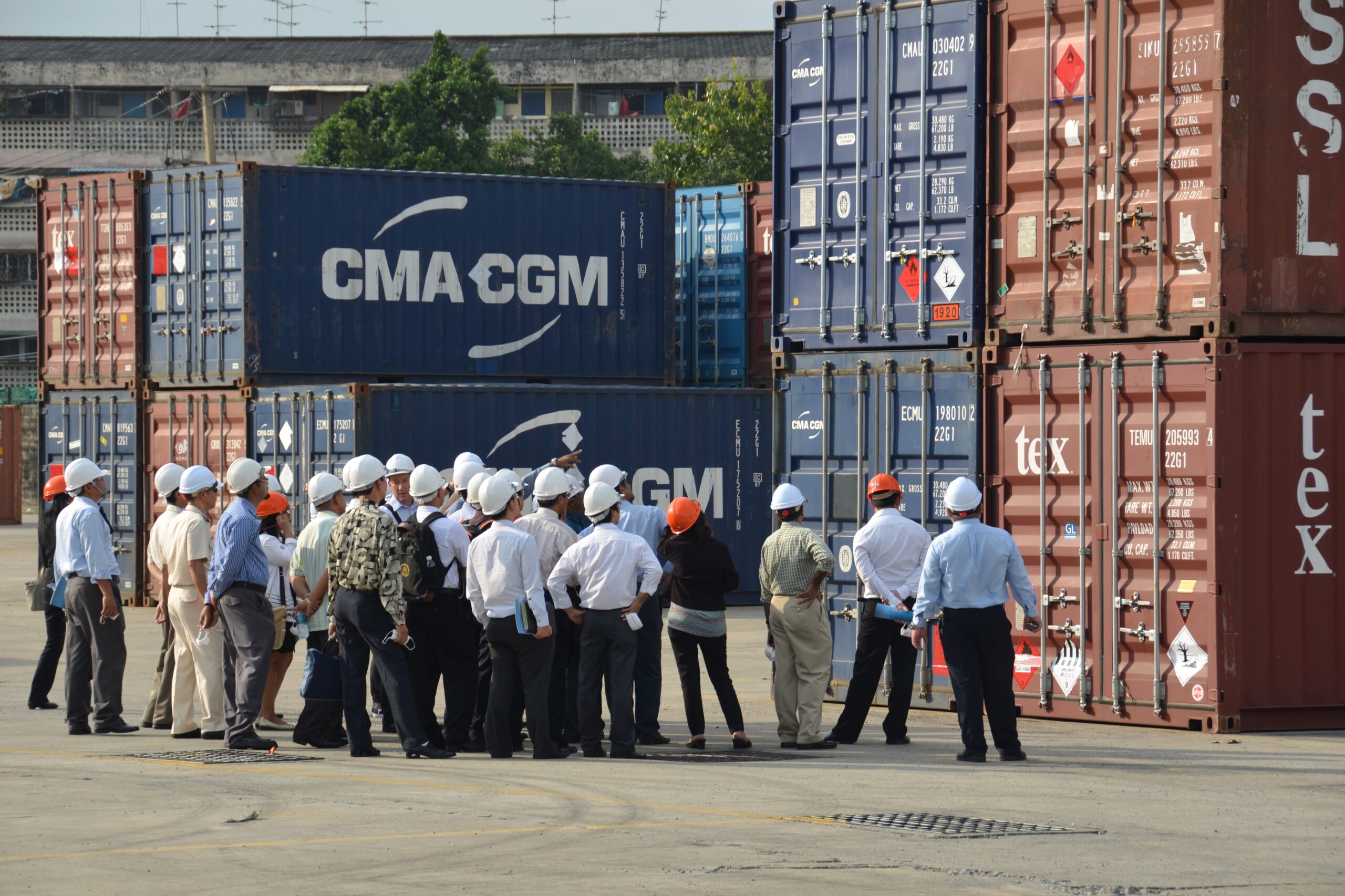
MariTerm AB offers training in the transport of dangerous goods for all personnel involved in the handling of transports in dangerous goods. The training is adapted to the current mode of transport, the dangerous goods categories/substances that are transported and handled, and to the personnel categories that are to be trained. The length of a 1.3 training is usually four-eight hours for a basic course and two-four hours for a refresher training course.
Frequently asked questions about dangerous goods
What are dangerous goods?
Dangerous goods are goods or substances with such chemical or physical properties that they can, on their own or in contact with other substances, such as air or water, cause damage to people, animals, the environment or property, or affect the safe operation of the means of transport if they are not handled correctly.
What is classified as dangerous goods?
Goods that are, for example, explosive, flammable, toxic, radioactive and/or corrosive may be classified as dangerous goods. Examples of dangerous goods are petrol, LPG, cigarette lighters, sulphuric acid, arsenic, radioactive substances, fireworks and aerosol cans. For the classification of dangerous goods, find more information here.
Are there different training courses for driving dangerous goods?
No, only different specializations depending on the type of transport and which classes are relevant. Drivers transporting dangerous goods must, with a few exceptions, hold an ADR certificate. They must undergo training (3-5 days) and then take a test, in Sweden at the Swedish Transport Administration. An approved certificate is valid for five years. After that, refresher training and a new passed test are required for the certificate to be extended for another five years.
Can I drive dangerous goods without ADR certificate?
The basic rule is that an ADR certificate is required to carry out road transport of dangerous goods. However, the ADR regulations allow for certain exceptions when ADR certificates are not needed, e.g. when transporting small quantities of packaged dangerous goods or transports that are needed for other activities, e.g. painters who have paint with them or a plumber who has gas tubes for welding.
How are dangerous goods marked and labelled?
The basic rule is that packaging must be type-approved and marked with the UN symbol to contain dangerous goods and be at least marked with UN numbers and class labels. Additional provisions apply to certain classes, substances and properties, as well as to sea and air transport. For the marking of dangerous goods, find more information here.
Are there any requirements for packaging when transporting dangerous goods?
Dangerous goods packaging must be sufficiently durable under normal transport conditions, be manufactured so that it does not leak, be sealed according to the manufacturer’s instructions, have no hazardous residues on the outside and be tested and UN-approved. Each package must be marked and labelled. A package can be a single package or a combination package of inner and outer packaging.
Find more information about packagings for dangerous goods here.
What is meant by limited quantity?
Limited quantity is a way of transporting dangerous goods without complying with all the provisions of the Dangerous Goods Regulations. The amount of dangerous goods is limited per inner and outer packaging. It is the shipper/consignor who decides whether dangerous goods should be packaged/transported as a limited quantity. Read more here about limited quantity.
What is meant by small load exemption?
Small load exemption is a way of transporting dangerous goods without complying with all the provisions of the dangerous goods regulations. The amount of dangerous goods is then limited per transport unit (maximum 1000 “points”) where each type of dangerous goods has been awarded a number of points per kilogram or litre depending on the assigned transport category. It is usually the carrier/driver who decides whether dangerous goods should be transported by the small load exemption. Read more here about the small load exemptions.
What is meant excepted quantities?
Transporting dangerous goods in excepted quantities is an exception that is common for all modes of transport. The exception only applies to very small quantities indicated by the codes E0-E5 in the Dangerous Goods List. Dangerous goods transported in excepted quantities have special provisions regarding packaging, marking, labelling and documentation. Read more here about excepted quantities.
Contact
Send a message
Contact details
Contact person
Nils Andersson
Phone
Email address
Address
MariTerm AB
Sporthallsvägen 2A
263 35 Höganäs
Sweden